

This one conversation about luxury home designs could save you a year of regret.
Imagine this: You’ve spent 18 months refining your dream home with a designer. The plans are perfect. The renders are breathtaking. You’ve shared them with family and friends. This is it — the home you can already see yourself living in.
Then you send the plans to a builder… and the price comes back 40% higher than expected.
Suddenly, stress replaces joy. And you’re faced with an impossible decision: scale back the vision you’ve fallen in love with — or move forward carrying the weight of financial strain.
I’ve seen this scenario play out too many times. And it’s entirely preventable, by following these 4 steps.
Step 1: Get Your Builder Involved Early
Often clients come to us after DA approvals, after design work, even after renders were complete — and still, no one had talked to them about cost.
The luxury home design was stunning. But no one had mentioned it would cost 50% more than they’d planned for.
The result? Painful revisions. Lost time. Crushed expectations.
And the dream home they fell in love with? It starts to feel out of reach.
It’s not the architect’s fault — they’re not builders. But it’s a costly mistake that could be avoided by bringing the builder in early.
If you make budget and design separate conversations, you can be left pouring months — even years — into a home you adore, only to realise too late that it’s beyond your financial reach.
Get your builder involved early to ensure your wishlist is grounded in reality, and there are no unwelcome surprises mid-journey.
Step 2: Be Clear About Your Budget
At the beginning of a custom home journey, it’s tempting to treat the budget as flexible. But whether it’s explicitly stated or quietly held, there’s always a limit (no matter how luxurious the home is) — and once that invisible line is crossed, the emotional impact is immediate.
That’s why being clear about your budget from the outset is so important. While many homeowners are concerned the builder will use this to extract more money, it actually allows them to be clear about your options – and avoid costly detours later.
Step 3: Bring Everything Under One Roof
One of the biggest stress points in a custom build isn’t just the cost — it’s the feeling that everything’s happening in pieces.
You’re making decisions about cabinetry one week, lighting the next, then being asked about landscaping — and no one’s helping you see how it all works together.
It starts to feel disjointed.
You’re signing off on things you don’t fully understand, hoping they’ll make sense later.
That’s when the doubt creeps in.
You start second-guessing decisions. Wondering if something’s been missed. And by the time it becomes obvious something’s off, changing direction can be time-consuming — or expensive.
That’s why the most successful projects aren’t just well-designed — they’re well-orchestrated.
When builder, designer, and client are aligned under one cohesive vision, everything becomes easier:
- You gain a bird’s-eye view of the entire build
- Design and cost decisions evolve together, not in conflict (especially if there’s touch points throughout, allowing you to adjust gracefully if things shift)
- You move forward with confidence, not uncertainty
Because no one wants to arrive at their dream home exhausted, over budget, and wondering where things went wrong.
Step 4: See it Before You Build it
One of the hardest parts of building a custom home is trying to make big, expensive decisions based on flat drawings and disconnected specs.
How do you know the kitchen will feel open enough?
That the master suite will get the morning light just right?
That the finishes you’ve chosen actually work together in the space?
You shouldn’t have to rely on imagination — or gut instinct — for something this important.
That’s why we suggest using cinematic 3D renders and immersive flythroughs to bring your selections to life — before anything’s locked in.
You’re not looking at static plans or abstract ideas. You’re walking through your future home, room by room, seeing how everything flows — and how it feels.
This isn’t just about avoiding mistakes. It’s about moving forward with confidence. Because when you’ve seen it — really seen it — you can make decisions with clarity, not guesswork.
Most Stress Experienced in a Custom Build is Caused by What Homeowners Don’t See Coming
A budget that was never discussed.
A design that outpaced the cost.
Decisions made in isolation, without context or clarity.
But it doesn’t have to be that way.
When you start with the right conversations — and the right team — you stay in control.
You make decisions with your eyes wide open.
And you build a home that’s not only beautiful, but grounded in reality from day one.
If you’re just starting to think about your custom home journey, we’ve put together something to help:
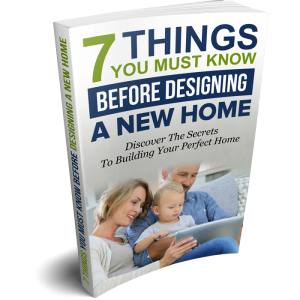
Free Guide: 7 Things You Must Know Before Designing a New Home
Inside, you’ll find:
- The biggest mistake that quietly derails builds — and how to sidestep it
- How to protect your budget and your vision
- What to ask before you sign anything with a designer or builder
- And plenty more to help you move forward with confidence
Download it here — and take the guesswork out of what comes next.